
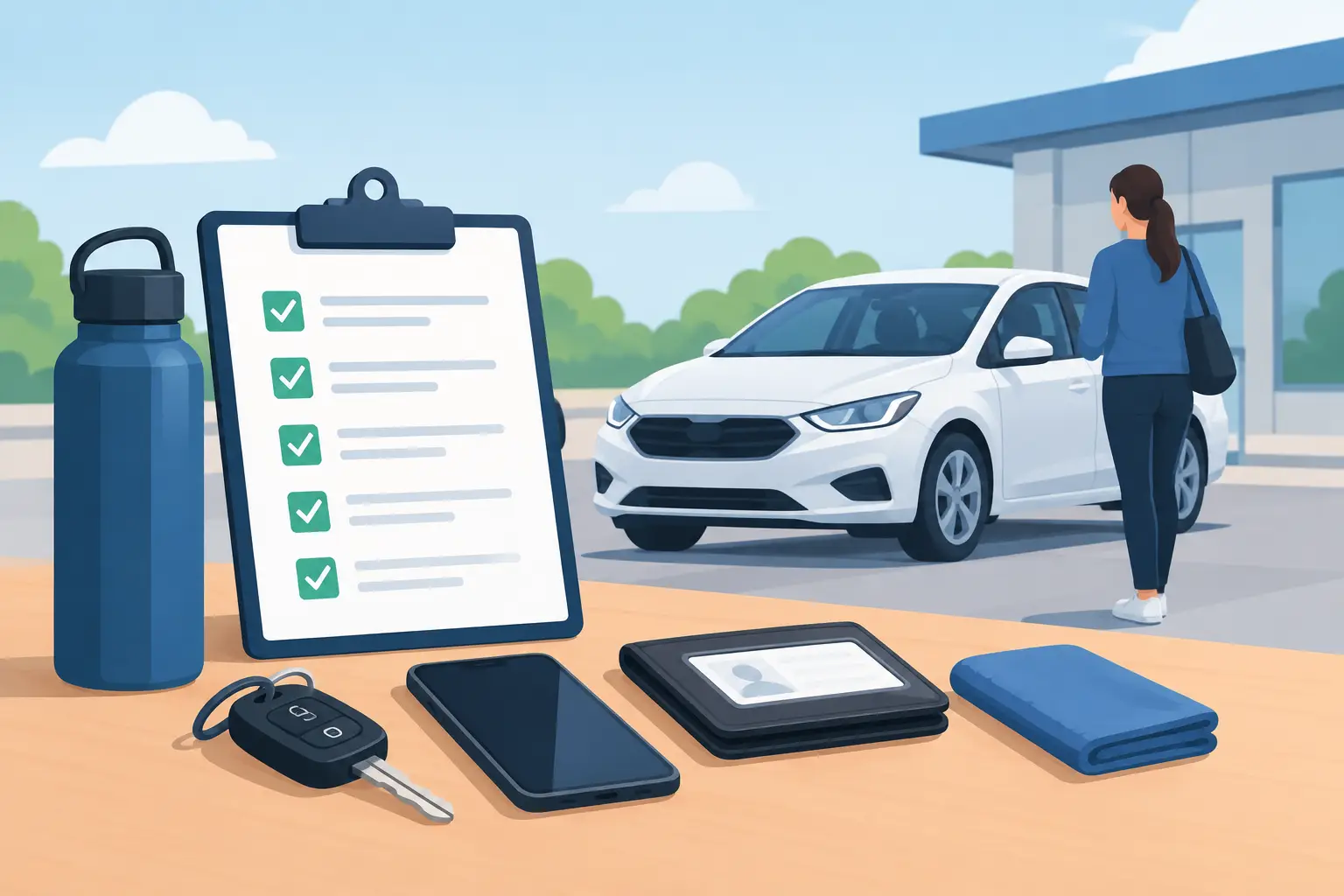
A practical test can feel like a big moment, especially when you have worked hard for it. Having the essential items for driving test day ready the night before removes one avoidable source of pressure. You should be able to focus on driving safely, making sound decisions and showing the independent skills you have built in your lessons.
For learners from South Shields taking their test at Sunderland Driving Test Centre, a little preparation also makes the journey to the test less rushed. This checklist explains what you need to bring, what your instructor will usually provide and what is worth checking before you leave home.
The essential items for driving test day
Your valid photocard driving licence
Your photocard provisional driving licence is the one item you cannot afford to forget. The examiner needs to see it before the test can begin. Check that it is valid, that it is the correct licence and that the name matches the details on your booking.
Put it somewhere obvious the evening before – a wallet, bag pocket or alongside your keys. Do not leave this until the morning, when nerves and last-minute rushing can make a simple item surprisingly easy to misplace.
If you still hold an older paper licence, check the current test instructions well ahead of time. You may need additional identification. It is always better to clarify this before test day than arrive hoping it will be accepted.
Glasses or contact lenses if you need them
At the start of the practical test, you will be asked to read a number plate from a set distance. If you need glasses or contact lenses to meet the required eyesight standard, wear them for the test and bring a spare pair if you have one.
This is not only for the number-plate check. If your licence requires you to use corrective lenses, you must use them throughout your drive. Do not choose a new pair of glasses for the first time on test day. Familiar, comfortable vision is what matters.
Your test appointment details
You will usually receive confirmation of your practical test booking by email. You may not be asked to show it, but keeping the appointment time, booking reference and test centre details on your phone or written down is sensible.
It helps you check you are going to the right place at the right time, particularly if somebody else is dropping you off. Sunderland Driving Test Centre has a set meeting process, so arrive in good time and follow the instructions in your booking confirmation. Aim to be settled rather than turning up flustered.
Any medication you may need
If you use prescribed medication, such as an inhaler, take it with you. The same applies to anything you reasonably need to stay comfortable and well during the appointment.
Do not take medication differently just because you are taking a test. If you are unwell, exhausted or affected by medication in a way that could impair your driving, speak to your instructor and consider whether proceeding is sensible. A driving test is not worth taking when you are not fit to drive safely.
The car matters as much as the paperwork
A practical test cannot start unless the vehicle is suitable. If you are using your driving instructor’s car, they will normally deal with the vehicle checks, insurance and required equipment. That is one reason many learners prefer to take their test in the manual car they have practised in.
A familiar car means you already know the clutch bite, steering response, mirrors, controls and reference points. It does not guarantee a pass, but it removes the extra task of adapting to an unfamiliar vehicle when you should be concentrating on the road.
If you are using your own car, or one borrowed from a family member, check the current vehicle requirements well in advance. It must be legal, roadworthy, insured for the test and display L plates correctly. It will also need a suitable passenger mirror for the examiner. Certain vehicles are not accepted, so do not assume that any insured car will do.
Arrange this early enough to fix a problem if one appears. A warning light, damaged tyre, unclear number plate or missing extra mirror can stop a test from going ahead. Your instructor can help you think through whether a proposed car is appropriate, but the final responsibility for a privately supplied car rests with you and its owner.
What your instructor should check
When you take a test in your instructor’s car, the practical arrangements should be calm and clear. Beforehand, they should make sure the car is presentable, fuelled, legal and fitted with the required dual controls and examiner mirror.
You will usually have time for a short drive before the test. This is not a last-minute lesson packed with new information. It is a chance to settle in, refresh the basics and deal with any practical questions. If you normally have two-hour lessons, this familiar structure can make the morning feel more manageable.
Things you do not need to overthink
Many learners worry about bringing the wrong things. You do not need to take your theory test certificate, as your pass is recorded digitally. You also do not need to provide a sat nav for the independent driving section. If the examiner asks you to follow a sat nav, they will provide it.
Your phone can stay with your belongings and should not distract you. Switch it off or silence it before you begin. You will not need revision notes, a route map or a list of manoeuvres either. By test day, the aim is to drive safely in response to what is actually happening around you, not to recite a script.
Bring water if it helps, but avoid arriving overloaded with bags and loose items. Keep the car tidy and the footwell clear. Comfort is useful; clutter is not.
Prepare the night before, not at the front door
A simple evening routine can make test morning noticeably easier. Put your licence, glasses, appointment details and any medication together. Choose practical, comfortable clothing and footwear that lets you feel the pedals properly. Shoes with very thick soles, loose sandals or unfamiliar footwear can make clutch and brake control less consistent.
Get a reasonable night’s sleep, eat something if that suits you and allow extra time for travel. A small delay should not turn into panic. If you are travelling from NE33 or NE34 towards Sunderland Driving Test Centre, account for traffic, parking arrangements and the time needed to meet your instructor.
Avoid spending the evening watching alarming test videos or trying to memorise every possible route. Test routes can change, and safe driving is not about predicting every turn. Your preparation should be based on the skills you have repeatedly demonstrated: observation, planning, speed control, positioning and calm decision-making.
Test readiness is more than remembering a checklist
The right documents and a suitable car are essential, but they are only the practical side of being ready. A test should be booked when you can drive independently and safely across a range of roads, not simply when you know the manoeuvres.
That is particularly relevant if you are nervous, returning to driving after a break or changing instructors. Confidence does not mean feeling no nerves at all. It means knowing how to manage them while still checking mirrors, judging gaps and responding safely when something unexpected happens.
Structured lessons and recorded progress give you evidence of this readiness. Mock tests around the Sunderland test area can be useful too, provided they are treated as learning tools rather than a prediction of the result. They can highlight patterns to improve, such as approaching roundabouts too quickly, hesitating unnecessarily or missing effective observations.
If an instructor recommends more practice, that is not a reason to feel discouraged. It is honest preparation. Passing your test matters, but being ready to drive independently around South Shields and beyond matters more.
A calmer way to approach test morning
On the day, try to think one stage at a time. First, arrive with your licence and anything you need for eyesight or health. Then settle into the car, listen carefully to the examiner and drive as you have been taught. If you make a minor mistake, do not assume the test is over. Regain focus and continue safely.
For South Shields learners who want patient, structured manual lessons and clear feedback on test readiness, ProPasser can help you build the independent driving skill behind the checklist. The best item you can bring to a driving test is the quiet confidence that comes from proper practice.


